Importing stone from India can lower cost and open up material and fabrication options — provided the process is controlled from specification through to delivery. The distance is not the risk; an uncontrolled process is. Here is how a well-run import actually works.
1. Specify before you price
Agree stone type, colour range, finish, thickness and tolerances up front, ideally against physical samples. A clear specification is what everything downstream is measured against.
2. Approve material and samples
Review control samples for colour and veining before cutting begins. For larger orders, approve a batch or block so the whole consignment stays within an agreed range.
3. Fabricate to drawings
Provide drawings and a cutting list. Components fabricated to size — with edges, cut-outs and finishes complete — reduce on-site cutting, labour and delays.
4. Inspect before shipment
Dimension checks, surface inspection and, where needed, dry fitting should happen before packing, not after arrival. Ask for inspection photos measured against the cutting list, plus container-stuffing photos. Catching an issue on the factory floor costs a phone call; catching it at your unloading bay costs a season.
5. Pack for the journey
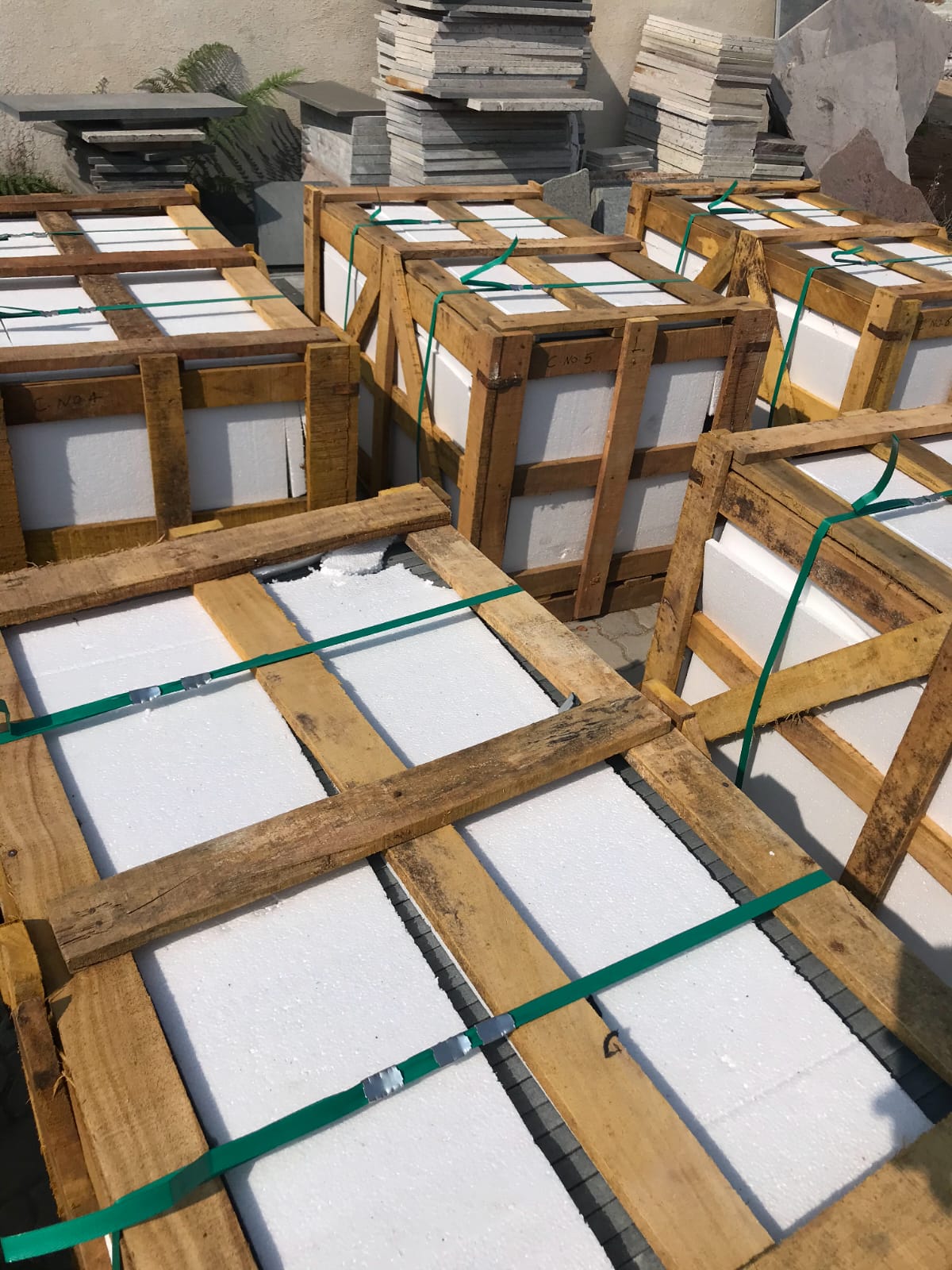
Sea freight is punishing. Foam-lined, strapped timber crates and correct load planning protect edges and corners in transit. Crates numbered to the set-out mean your team unloads in sequence instead of opening everything to find one tread.
6. Get the paperwork right
Commercial invoice, packing list, certificate of origin and the correct export documentation keep the consignment moving through customs. Errors here are the quiet killer — a consignment held at port earns demurrage while everyone emails. Coordinating documents through the same partner who fabricated the stone avoids the gaps.
The same discipline works at home
Nothing above is unique to importing. An Indian buyer taking delivery by road needs the same specification, the same lot approval, the same pre-dispatch inspection and the same crating — with a GST invoice instead of a bill of lading. The only thing that changes is the last leg.
Handled this way, buying becomes predictable: you approve what you will receive, and it arrives ready to install.