More stone is damaged in transit than in fabrication. Packing is not an afterthought — it is part of delivering installation-ready material. This applies as much to a six-hour truck run as to a six-week sea voyage; loose-loaded stone on an open truck arrives just as chipped as badly crated stone in a container.
Protect the vulnerable points
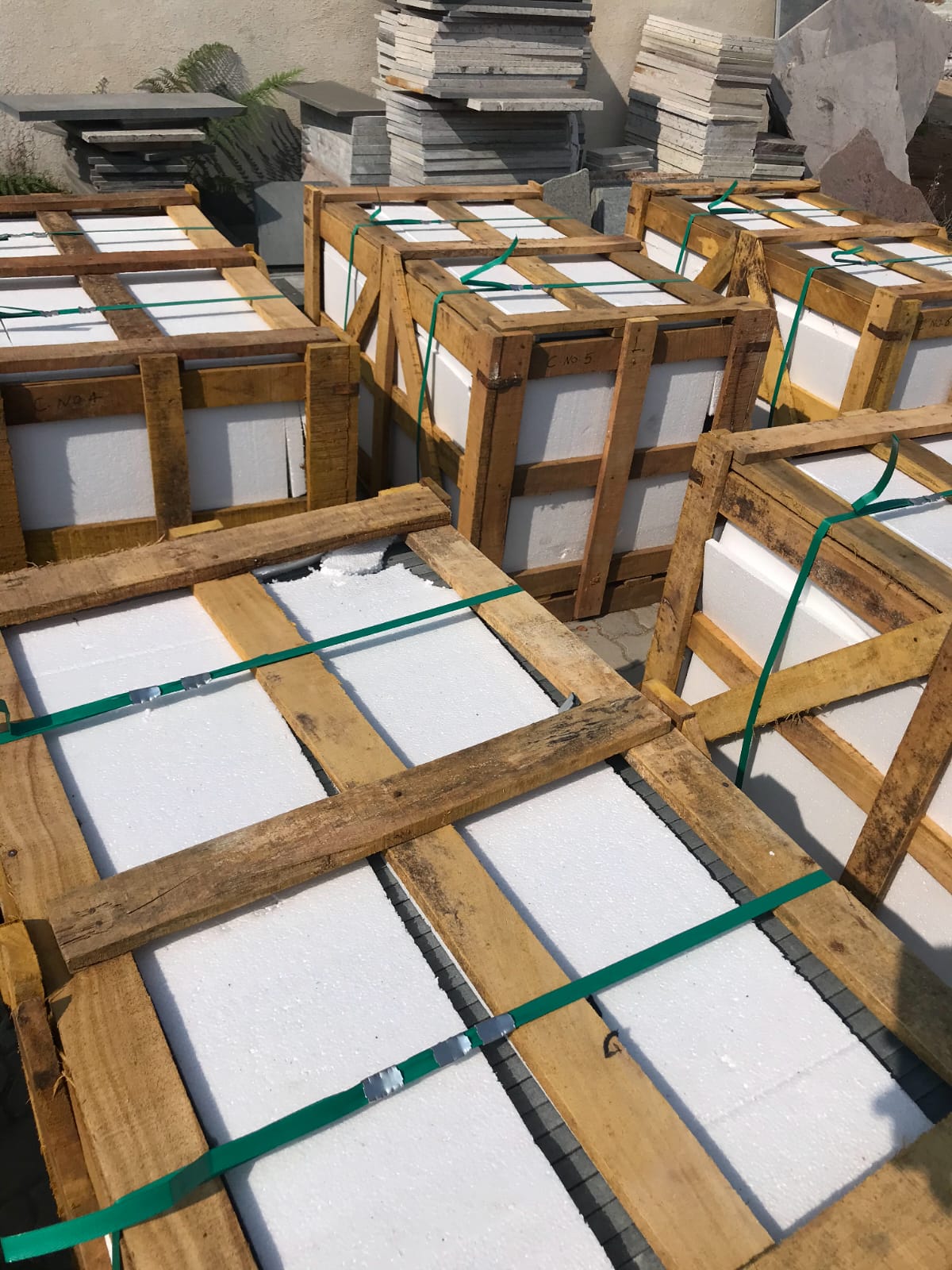
Edges and corners take the impact. Foam lining, edge protection and snug packing keep pieces from moving and chipping.
Build crates for the load
Timber crates should be sized and braced for their contents, strapped, and numbered against the packing list so the site team can unload in sequence.
Plan the load
Weight distribution and load planning matter for both safety and breakage, in a container or on a flatbed. Heavier crates low, secured against shifting, nothing free to move on a bad road or in a heavy swell.
Label for the site, not just the port
Clear crate numbering that maps to the set-out drawing means the right pieces reach the right area without opening everything first. Ask for the crate list alongside the invoice — your site engineer will use it more than you will.
Ask for the photos
Packing photos before sealing, and stuffing photos before the doors close, cost the supplier nothing and tell you everything. A supplier who will not send them is telling you something too.